The fourth edition of Summit Run Sethan Dome challenged runners with some of the toughest weather conditions in the event's history. Persistent rain, cold temperatures, dense fog, and slippery trails greeted athletes across the 50K, 25K, and 16K races, turning the mountains above Manali into a demanding test of endurance and judgment.

Racing above 3,000 metres, the low visibility and wet terrain added another layer of complexity to the course. The conditions rewarded patience and smart decision-making as much as physical fitness, forcing competitors to adapt throughout the day.

The flagship 50K race belonged once again to the defending champions. Rahul Thakur successfully defended his men's title and Tenzing Dolma retained the women's crown. Sharang Ravindran and Jinesh Pillai completed the men's podium, while local runner Debasmita Rath finished second to Dolma.

Rather than records or personal bests, the 2026 edition became a story of resilience, adaptability, and perseverance in authentic Himalayan mountain conditions. Participation remained strong, and volunteers and aid station crews provided consistent support across the course, helping maintain a positive atmosphere from start to finish.

Summit Run Sethan Dome highlighted the type of high-altitude terrain and mountain racing culture that continues to drive trail running's growth in India. For a race currently progressing through the One Hundred Candidate Event process, the 2026 edition offered a meaningful demonstration of operational resilience. The result was an event that successfully navigated one of the most demanding weather days in its history while maintaining the mountain experience that has become its hallmark.

The Summit Run series continues with Summit Run Indrahar (3 October) and Summit Run Lurntsu Circuit (5 December), both also on the One Hundred Candidate Event pathway. View the full One Hundred Candidate Events calendar.
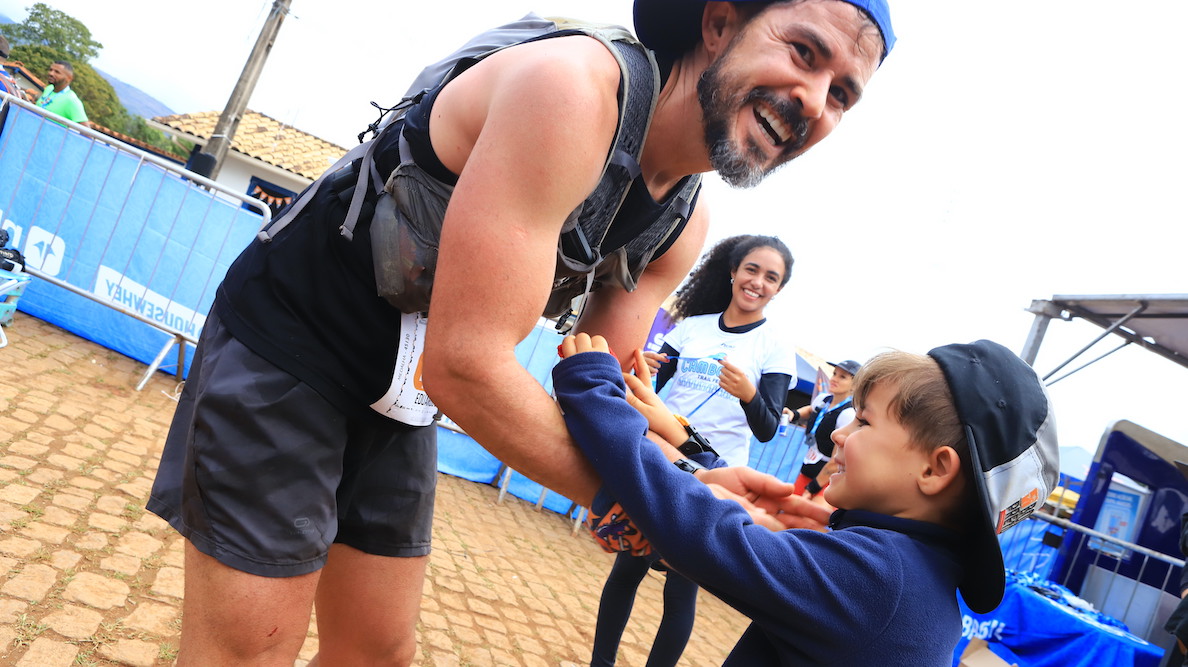
Eduardo Saliba at the 2026 Cambotas Trail Fest finish line with his son.

The 2026 Cambotas Trail Fest once again brought Brazil’s trail running community together for a weekend of challenging mountain racing, local pride, and shared adventure in the Serra da Cambota. From elite athletes chasing podium positions to families, children, and first-time trail runners embracing the event atmosphere, the festival showcased the unique connection between sport, nature, and the community that calls these mountains home. 

Alongside some of the biggest names in Brazilian trail running battling across the rugged terrain for hard-earned podiums, athletes hailing from Barão de Cocais competed for exclusive awards highlighting the strength of local runners and celebrating the event’s deep connection with the community that hosts it. 

Racing unfolded across the region’s steep climbs, forest sections and fast descents that shaped conditions for all categories. While this year the routes for the longer categories were adjusted for safety reasons, the challenge remained through significant elevation gain, technical terrain, fast descents and the rugged mountain conditions that define Cambotas Trail Fest.

The 45K race produced the most decisive winning margin of the weekend. André Luiz Mapa took the men’s victory in 5:05:00, finishing nearly 20 minutes ahead of Whanderson Assis Ramos (5:23:54) and Victor Eugênio de Resende (5:26:19). In the women’s race, Maria Aparecida da Cunha won in 6:06:23 with a similar lead ahead of Diana Bellon and Isabel Campos Coelho, who completed the podium after a closely contested finish separated by less than a second.

Despite the technical course, the 27K race featured tight winning margins from fierce competitors. Bruno Bullé Costa Esteves won the men’s race in 2:35:50 ahead of Rafael Moreira da Cruz Silva and Josemar Lazaro Ferreira. In the women’s race, Thais de Jesus Arcanjo took victory in 3:24:38, narrowly holding off Izabela Tiago Germano, while Marnie da Rocha Fortes placed third.

Beyond competition across the 6K, 11K, 17K, 27K and 45K categories, the youth and children's races brought energy, smiles and excitement, reflecting a growing passion for trail running among the next generation.

Following a weekend of competitive racing, community celebration and unforgettable mountain experiences, Cambotas Trail Fest once again demonstrated why it holds a special place on Brazil's trail running calendar, bringing together everyone who shares a genuine affinity for the mountains.

For full results across all categories, visit the event website.

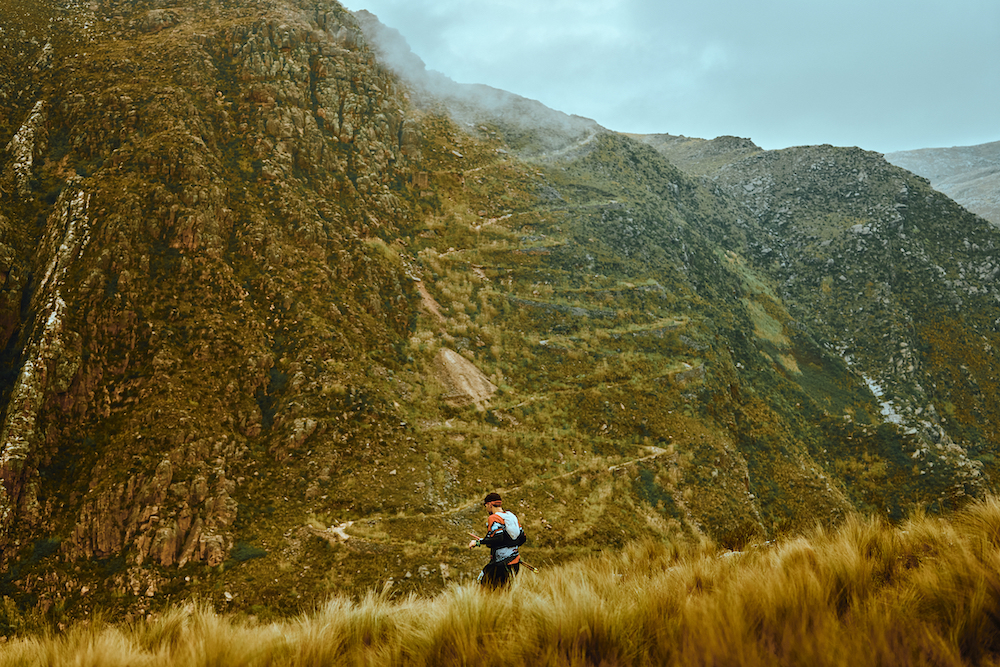
a runner at the foot of a hairpin climb at the Ultra Trail al Aspero

Set deep within the Lutti mountains of Córdoba, Ultra Trail al Áspero once again delivered an extraordinary weekend where endurance, nature and community came together. From 17–19 April 2026, runners, spectators and volunteers embraced the full mountain experience camping, racing and celebrating side by side – while unforgettable sporting moments, including a shared victory in the 45K race, captured the essence of what makes this event so special.

Endurance challenge went hand-in-hand with camaraderie, personal growth, and connection with nature at the Ultra Trail al Áspero on 17-19 April 2026.

The Lutti mountains in Cordoba served as the backdrop for one of the most special races on the Argentine trail running calendar: the only one that starts and finishes in the backyard of its organizer’s home, 30 kilometres away from the nearest town.

And this year, that special finish line saw two champions cross hand-in-hand to share the win in the 45K category.

Both regular contenders in the region's most competitive trail races, David Cabral and David Molina set aside their rivalry for mutual respect and the spirit of the sport – a spontaneous gesture that moved the cheering crowd.

The men’s podium was rounded out by César Vele, while in the women’s race, Verónica Borrelli took first place, followed by Vanesa Ontivero and Mónica Sosa.

The 25K race featured a high-level men’s finish with Tomás Teti taking the win, joined on the podium by Ramón Esteban Ramírez and Lucas Maldonado. Among the women, Yohana Aguirre claimed victory alongside Mercedes Linares and Azul Bustos.

In the 15K race, Andrés Ortega took first place in the men’s division and Adriana del Valle Pizarro led the women’s standings, while the 7K race drew a huge turnout and kickstarted the journeys of those new to the sport of trail running.

The Ultra Trail al Áspero is a multi-day adventure deep in the mountains, where competitors, spectators, volunteers, and staff camp out, with the entire community of Villa Los Prados coming together to celebrate a truly human experience. Hundreds of runners tackled technical terrain, demanding elevation changes, and long hours on the mountain, always accompanied by the cheers of the crowd, volunteers, and families.

Marking the beginning of its evaluation period as a Candidate Event of the One Hundred World Championship, the Ultra Trail al Áspero made a strong case for its elevation to the prestigious global series.

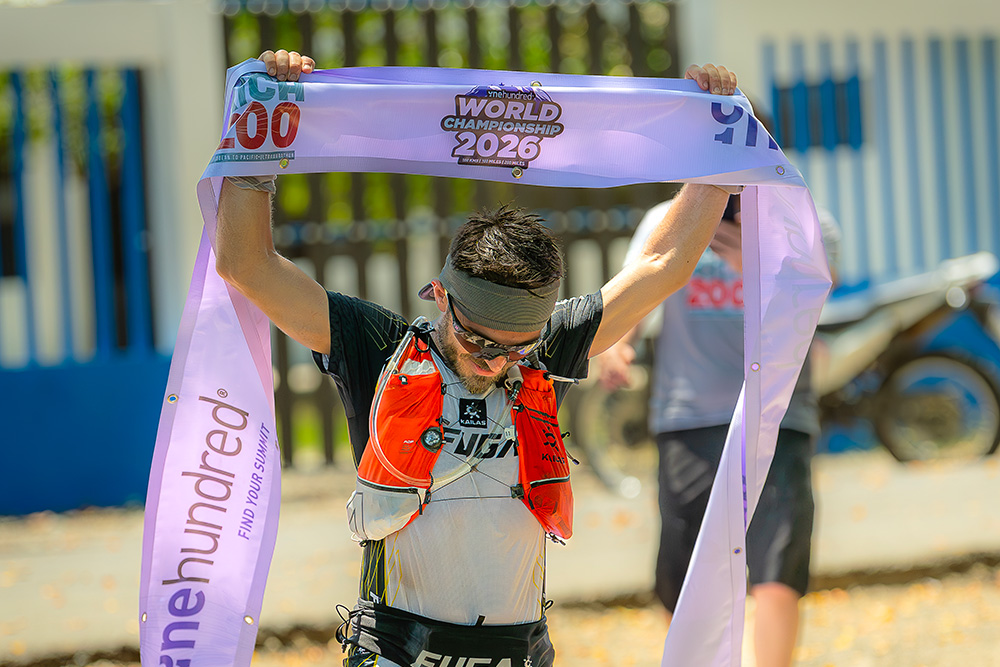
Martin Perrier wins the 2026 Costa Rica 200 Ultramarathon.

The latest edition of the Costa Rica 200 once again proved that this race is about far more than finishing times. Crossing the country from the Caribbean coast to the Pacific Ocean, Costa Rica 200 asked athletes to endure multiple challenges from terrain and climate building into physical and mental fatigue that strips everything back to character.

The route was brutal from the beginning. Runners started their day at the Cariari National Wetlands for a 7-kilometre beach prologue, opening the race in crushing humidity before the official start later that morning in Goshen. It was only the beginning of a course that would climb through jungle mountains and descend, days later, to the Pacific.

At the front of the 200-mile race, Martin Perrier delivered a performance that redefined what was possible on the course. Through rain-soaked trails, bursts of tropical heat, and the notorious “Monster Segment” on the Ruta Sukia, he held the lead from early on and never let it go.

His race, however, was not without complication. Perrier failed to carry a backup battery to recharge his GPS devices, leaving him without navigation through part of the most technical section of the course. In that moment, feeling exposed and uncertain, he activated his emergency tracker before regaining composure, cancelling the alert, and continuing on course. Under race regulations, these actions resulted in a combined five-hour penalty.

Even with that time added, his official result of 83:05:03 stood nearly eight hours faster than last year’s winning mark, an extraordinary performance shaped not only by speed, but by the ability to recover from error and keep moving forward.

If Perrier led the race, Sandra Mejía embodied control and consistency. Returning for her second year, Mejía once again mastered one of the toughest courses in the region. Across rain, heat, cold, mountains, and coastline, she defended her title to finish as first woman and second overall with a faster time than last year.

Among the most respected performances came from Oliviero Alotto, who started the race already managing pain in one leg. Moving without his usual ease, he endured every stage of the course and claimed second place in the men’s category, a result built entirely on resilience.

Not every story ended at the finish line. Fran Santin pushed beyond 300 kilometres before worsening foot conditions forced her withdrawal. Along the way, she also lost the course briefly and had to retrace her route using her GPS tracker, another reminder of how unforgiving the terrain can be.

The event’s 100K category added another standout performance, with Michele Graglia taking control early and never relinquishing it, recording a decisive comeback to racing after hiatus. He secured victory ahead of Fernando Brenes, Adrian Lopez and Javier Echecopar.

Eventually, every finisher faced the same closing test: a rocky, relentless descent, then straight into the final hot and humid 19 kilometres to the Pacific coast. By then, the race had already asked everything.

The final finish-line moment captured the spirit of Costa Rica 200. The last finishers in the 200M and 100K races respectively, Declan Murray and Javier Echecopar crossed together.

Costa Rica 200 remains one of the sport’s purest endurance challenges, not just for its distance, but for what it demands of the people who take it on. Decisions matter. Mistakes carry consequences. And the ability to recover, adapt, and continue often defines the outcome.

As part of the One Hundred World Championship pathway, the race also awarded valuable ranking points toward Grand Final qualification. On a course this unforgiving, those points were always going to be earned the hard way.

For those inspired to test themselves, the One Hundred race calendar offers the next opportunity to step onto the course.

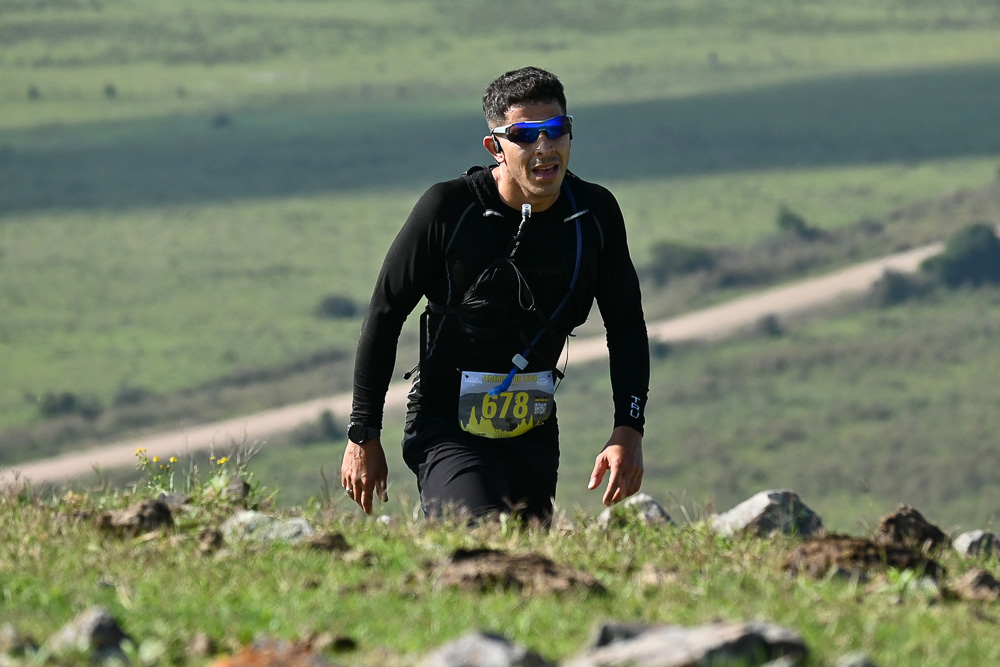
Set in the rugged mountains of Uruguay’s Lavalleja region, Desafío Campanero once again confirmed its place as one of the country’s most demanding trail running events.

The race unfolded across the steep slopes of Cerro Campanero, where technical trails, rocky climbs, and exposed ridgelines combined to create a sustained test of strength and control. Hundreds of competitors rose to the challenge across all three race categories, showcasing the continued growth of trail running in the region.

While Desafío Campanero has become synonymous with rain, mud and challenging weather conditions in previous editions, this year sunshine dominated much of the day. The warmer conditions exposed runners to sustained heat on the climbs and added another layer of difficulty to an already demanding course. Rain eventually returned as the event drew to a close and the final participants approached the finish line, as if restoring the race’s trademark character.

In the 27K category, the men's race came down to a near-sprint finish. Alexis Castro claimed victory in 2:41:30 after a tightly contested battle with Lucien Epiney, who finished just 25 seconds behind. Facundo Scaglia completed the podium.

The women's race was equally competitive, with Federica Frontini taking the win in 3:24:06 ahead of Laura Moratorio and Lucia Carrizo. The top three were separated by only minutes after a demanding day in the hills.

The 18K category delivered fast and intense racing across steep, continuous climbs. Oscar Maldonado secured the men's victory in 2:07:22 ahead of Matías Torres and Federico de León, while Valentina Espino won the women's race in 2:37:50 following a decisive late surge to move clear of Mia Zabala and Cindy María Escudero Altez.

The 9K race attracted a strong community turnout, offering an accessible introduction to the terrain and challenge of Campanero while contributing to the event's festival atmosphere. With participation notably skewed towards female runners, it reflected the growing accessibility and appeal of trail running in Uruguay.

As a One Hundred Candidate Event, Desafío Campanero is currently under evaluation for elevation to the One Hundred World Championship Series.

For official results, visit the results page.

Page 1 of 2

GLOBAL PARTNERS

Image
Image
Image
Image
Image
FOLLOW OUR EVENTS LIVE @
Image
Image
Facebook
Youtube
Instagram
LinkedIn
Facebook
Youtube
Instagram
LinkedIn

London, UK

20-22 Wenlock Road
N1 7GU
Image

World Championship

Resources

Keep in touch

Please fill the required field.

Sign UP